Inquire
Balancing Cost and Precision: LMF LUU Round Flange Linear Bearing China Manufacturer Insights
 2026-07-08
Understanding LMF LUU Round Flange Linear Bearings in Modern Automation
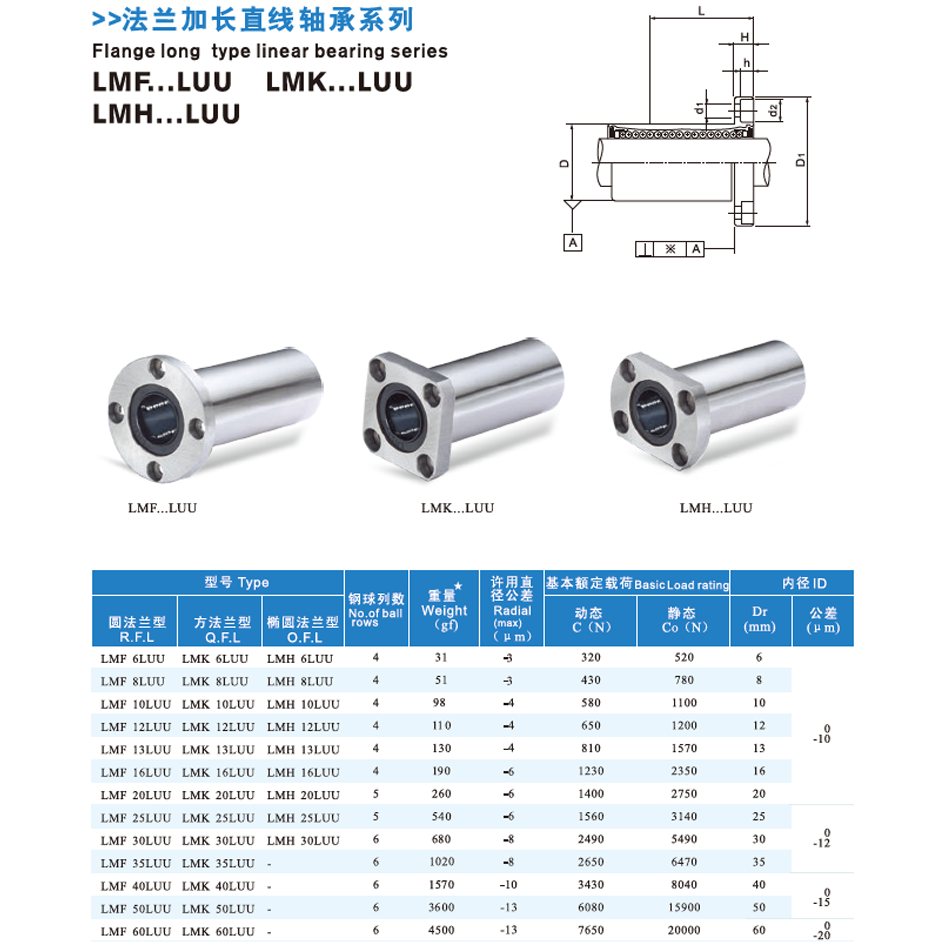
In automated manufacturing, linear motion components have a direct impact on machine stability, precision, and long-term reliability. Among these components, the LMF LUU round flange linear bearing China manufacturer segment plays a crucial role in supporting CNC machines, packaging equipment, 3D printers, and industrial robots. Flange linear bearings such as the LMF6LUU–LMF100LUU series provide a combination of compact structure, easy mounting, and stable linear guidance along optical shafts.
Zhejiang Jingrui Intelligent Transmission Co., Ltd., also known as LDA bearing, focuses on the design and manufacturing of linear motion products based on GCr15 (SAE‑52100) bearing steel, including the LMF…LUU series flange linear bearing. These bearings feature a hardened outer sleeve, nylon retainer, double‑sided rubber seals, and pre‑filled lubricant. This configuration is aimed at reducing friction, controlling contamination, and ensuring consistent linear travel for all kinds of automated equipment.
Compared with generic low‑cost imports, a specialized China supplier for LMF6LUU LMF8LUU LMF12LUU LMF16LUU must address not only dimensional accuracy but also long‑term performance. Surface hardness, seal integrity, and lubrication quality are critical for equipment that runs continuously. LDA bearing integrates these factors into its linear bearing production, aligning precision requirements with ISO9001 and ISO14001 certified processes to meet demanding assembly line applications.
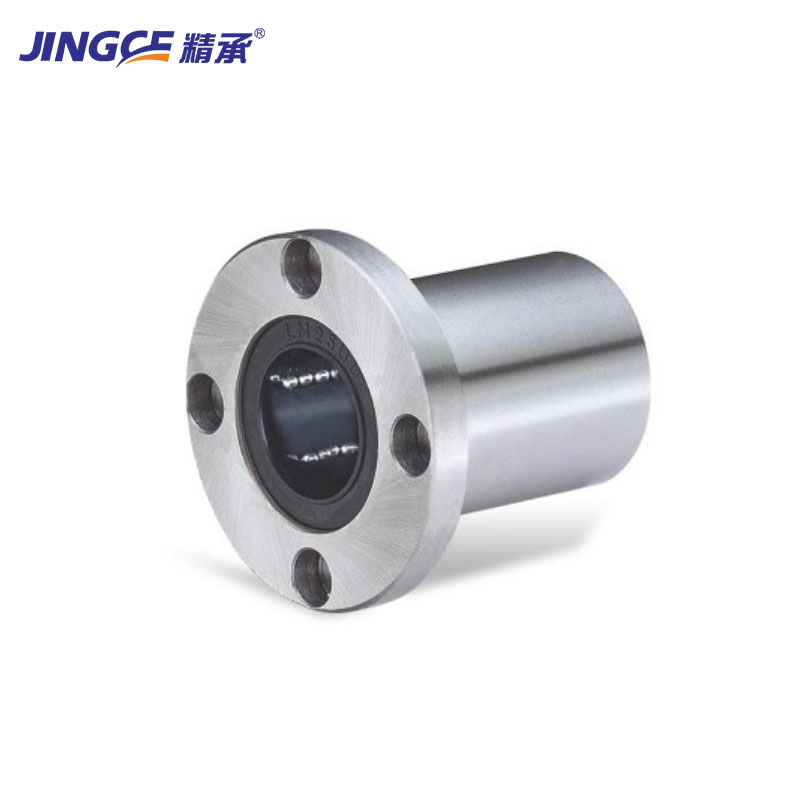
The LMF LUU series from LDA bearing is typically used in CNC machines, automation equipment, precision instruments, packaging machinery, and 3D printers, where stable linear motion and controlled misalignment are essential. These bearings are designed to work within broader motion systems that include linear optical shafts, aluminum guideways, and rod end bearings, forming a cohesive linear motion platform rather than isolated components.
Industry Pain Points: Cost, Precision, and Supply Chain Pressures
The linear motion market is characterized by polarization. At one end are international brands with high procurement costs; at the other are low‑end, unbranded products with inconsistent quality. For many equipment manufacturers, this creates a persistent tension between budget constraints and performance requirements. When selecting an LMF LUU round flange linear bearing China manufacturer, companies often struggle to reconcile premium specifications with cost control, especially for large projects where hundreds or thousands of bearings are needed.
Raw material fluctuations in steel and aluminum, combined with rising labor and energy costs, exert pressure on traditional bearing factories. Some manufacturers respond by lowering material standards or reducing inspection steps, which directly affects bearing life and batch consistency. Homogenization in processing techniques—particularly in grinding and heat treatment—can lead to subtle deviations in internal clearance and surface quality. Over time, these deviations appear as jittery motion, premature wear, or uneven load distribution along optical shafts.
Supply chain stability is another recurring issue. Long lead times for linear bearings and guideways can delay equipment delivery or cause assembly lines to halt. For series like LMF6LUU and LMF12LUU, which are commonly used in automation fixtures and small CNC modules, stock shortages force buyers to mix suppliers and specifications. This increases the risk of mis‑matched tolerances and incompatible components, making maintenance and replacement more complicated.
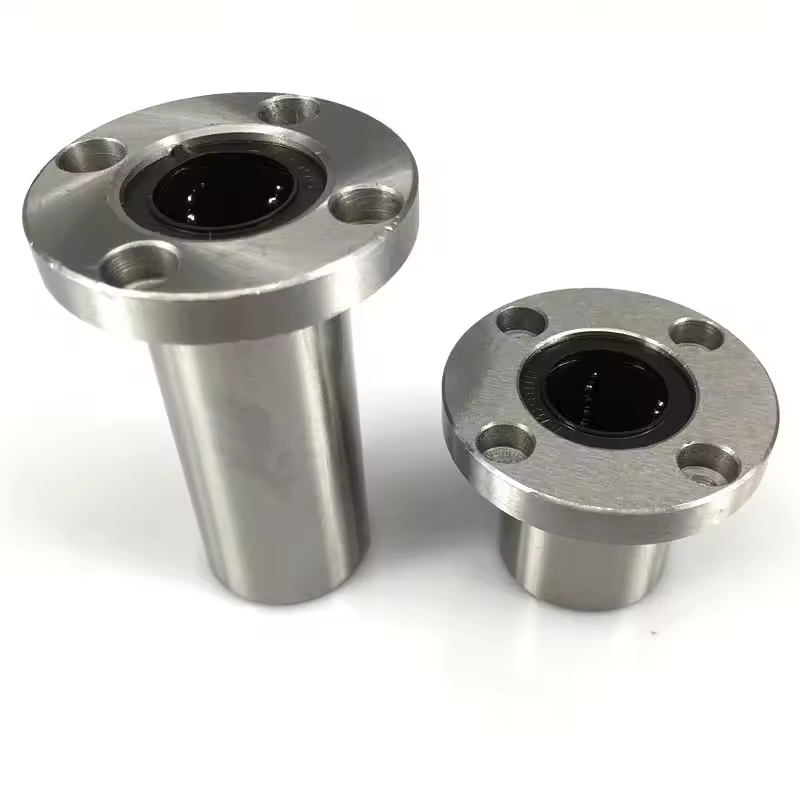
Additionally, many catalog products do not fully match specialized design requirements. Automation integrators may need unique stroke lengths, custom aluminum slider block sizes, or specific seal materials for harsh environments. Without flexible technical support from the bearing supplier, mechanical engineers must compromise on design or invest extra time to adapt standard components, which slows down product development cycles.
How LDA Bearing Addresses User Pain Points with Integrated Linear Motion Solutions
Based in Lishui City, Zhejiang Province, LDA bearing integrates bearing manufacturing, aluminum processing, and electromechanical assembly to respond to these challenges. For the LMF LUU round flange linear bearing China manufacturer segment, this integration allows coordinated control of materials, machining, heat treatment, and inspection. By aligning linear bearings with optical shafts and aluminum slider blocks, LDA bearing aims to minimize the typical mismatch that occurs when components are sourced from multiple independent suppliers.
Cost‑quality balance is a core issue for designers and purchasing managers. LDA bearing positions its linear bearings to match the quality standards applied by leading automation brands while maintaining a more favorable cost structure. In practice, this helps equipment manufacturers reduce procurement cost ratios without sacrificing motion accuracy. When combined with optimized aluminum guideways and rod end bearings, the overall motion system can achieve measurable improvements in both speed and durability.
Supply chain agility is supported by rich stock of models such as LMF6LUU, LMF8LUU, LMF12LUU, LMF16LUU, and larger sizes up to LMF100LUU, with shipping methods ranging from sea and air to rail and truck. Typical delivery times of 10–15 days for standard packages and customized packaging options help automation projects maintain planned schedules. This stock strategy is particularly relevant for distributors and integrators that must respond quickly to urgent orders or unexpected line expansions.
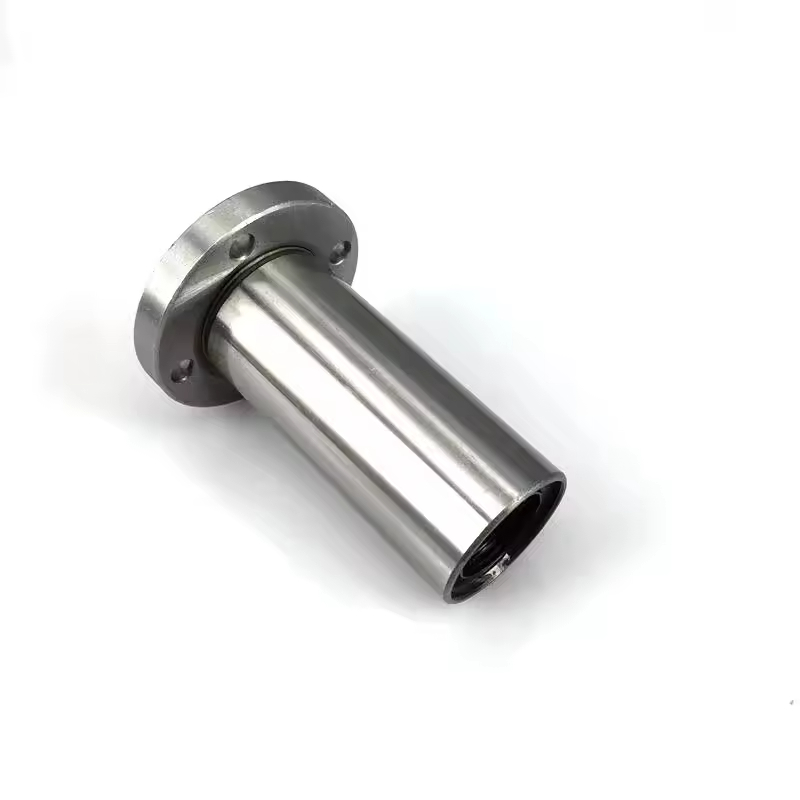
From a technical perspective, the LMF…LUU series uses GCr15 bearing steel for the outer sleeve combined with a nylon retainer and double rubber seals. Pre‑filled lubricant simplifies initial installation and reduces the risk of dry running during commissioning. Recommended maintenance includes storage in dry, dust‑free environments, periodic cleaning with non‑abrasive agents, regular grease replenishment, and inspection for shaft wear and seal integrity. These steps are aligned with the operational needs of CNC and packaging machinery running multiple shifts.
Complementary Components: Linear Bearings, Guideways, Rod End Bearings, and Drag Chains
Linear motion performance depends not only on the bearing itself but also on the surrounding components. In addition to LMF LUU round flange linear bearings, LDA bearing manufactures linear bearings and optical shafts that provide ultra‑smooth, low‑friction movement along a fixed axis. High‑precision shafts, matched with appropriate linear bearings, help ensure straight‑line travel with minimal resistance. This is crucial in automated assembly, 3D printing, and inspection systems where positional accuracy directly affects product yield.
Aluminum slider blocks and linear guideways provide structural support and directional tracking for heavy or fast‑moving loads. These elements bear the weight of the equipment and absorb dynamic forces during acceleration and deceleration. By adopting lightweight aluminum alloys in certain structures, motion systems can reduce inertia, improve acceleration responsiveness, and lower energy consumption. When coordinated with LMF LUU flange bearings, guideways can help minimize vibration and jitter for smoother, more predictable motion profiles.
Rod end bearings, sometimes referred to as fish‑eye joints, play an important role in allowing multi‑angle articulation and self‑alignment. They absorb misalignment and vibration between components, preventing localized stress on linear bearings and shafts. In high‑speed packaging lines or robotic arms, combining rod end bearings with LMF LUU flange bearings and linear guideways can reduce stress concentrations and extend service life, especially when loads fluctuate or mounting surfaces are not perfectly aligned.
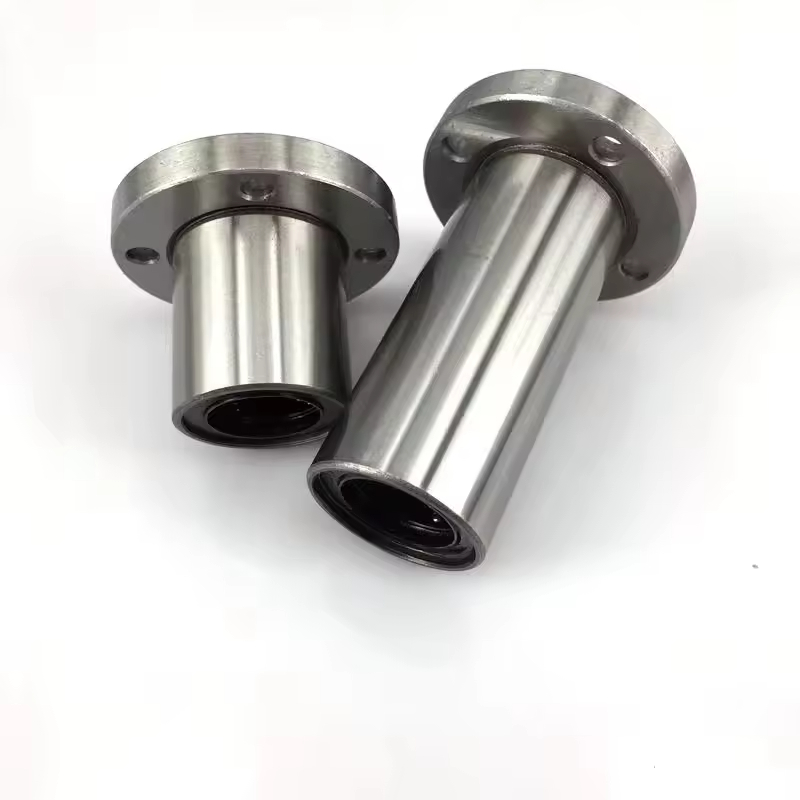
Aluminum drag chains provide guidance and protection for cables, hoses, and tubing during repetitive motion. Reliable cable management reduces unexpected downtime caused by cable wear and accidental snagging. As motion systems become faster and more compact, drag chains, guideways, bearings, and shafts must function as a coordinated whole. LDA bearing’s portfolio of linear bearings, aluminum components, rod ends, and drag chains aims to supply this entire support chain, simplifying sourcing for automation integrators.
Case Studies: Data‑Driven Results from Real Applications
In one automation project, a medium‑size integrator specialized in assembly lines for consumer electronics. The engineering team needed a China supplier for LMF6LUU LMF8LUU LMF12LUU LMF16LUU to match the motion quality of previous high‑end systems, but the project budget was tightly constrained. By adopting LMF LUU round flange linear bearings and compatible optical shafts from LDA bearing, they achieved a 20% reduction in procurement costs while maintaining linear motion performance comparable to their previous solution. According to the project manager, this cost shift enabled them to allocate more budget to control systems and software without compromising mechanical reliability.
Another example comes from a packaging machinery manufacturer focusing on high‑speed carton sealing and labeling. Their earlier machines used heavier steel components, causing limited acceleration and frequent cable wear. After integrating LDA bearing’s lightweight aluminum slider blocks, linear guideways, LMF…LUU flange bearings, and drag chains, the production line recorded a 15% increase in packaging speed. Maintenance intervals extended by several months, and unplanned downtime related to motion components was effectively eliminated. The operations manager reported that the new configuration provided smoother motion and simpler maintenance routines.
A global industrial distributor working with European customers faced stringent regulatory requirements for bearings and motion components. They needed linear bearings with documented inspection and certification for every batch. By sourcing from LDA bearing, which holds ISO9001 and ISO14001 certifications and CE inspection reports, the distributor reduced the time spent on compliance verification and technical documentation. In the first year, warranty claims related to linear bearings decreased noticeably, and the distributor streamlined its qualification process for new equipment models.

In a different case, a 3D printer OEM transitioned from mixed‑source bearings to a unified set of LMF LUU flange bearings, optical shafts, and rod end bearings from LDA bearing. This change reduced model fragmentation and simplified inventory. Internal analysis indicated a 30% reduction in component‑related costs, while print head positioning accuracy improved enough to increase the pass rate of printed parts by approximately 25%. The mechanical engineering manager noted that consistent bearing quality across batches was a key factor in reducing calibration time.
Customer Feedback and Technical Collaboration
Project managers and mechanical engineers often describe their experience with LDA bearing in terms of predictability and technical collaboration rather than marketing slogans. One engineering manager at an automation integrator commented that consistent tolerances in LMF LUU round flange linear bearings simplified fixture design and reduced the need for on‑site adjustments. With stable dimensions and surface finish, their team could standardize module designs across different projects, reducing design lead times.
A maintenance supervisor at a packaging plant highlighted the practical impact of bearing and guideway stability. After replacing older components with LMF LUU flange bearings and matching guideways, the line showed fewer vibration‑related alarms and smoother startup behavior after maintenance. This allowed technicians to focus more on process optimization rather than troubleshooting motion irregularities, and maintenance logs reflected fewer interventions related to linear motion failures.
From the perspective of a purchasing manager at a machinery manufacturer, the ability to obtain detailed inspection reports and align deliveries within 10–15 days for key models such as LMF12LUU and LMF16LUU reduced planning uncertainty. Since stock levels at LDA bearing are maintained for standard models, urgent orders could be handled without disrupting production schedules. The manager pointed out that price stability and clear communication about lead times were just as important as the components themselves.
Technical collaboration also extends to custom requirements. When design teams require specialized slider blocks, unique mounting hole patterns, or adapted seals for particular environments, engineers at LDA bearing work with them to reconcile performance targets with manufacturability. This cooperative approach helps bridge the gap between catalog specifications and real‑world design constraints, making it easier for companies to implement linear motion systems that match project‑specific needs.
Quality Systems, Certification, and Long‑Term Reliability
Trust in a LMF LUU round flange linear bearing China manufacturer is closely linked to quality management and environmental practices. LDA bearing has obtained ISO9001 Quality Management System and ISO14001 Environmental Management System certifications, indicating structured control over production processes and environmental impact. For customers, these certifications provide measurable assurance that manufacturing and inspection routines follow established standards, which is particularly relevant for automotive and medical equipment applications.
Products are supported by CE inspection reports from recognized third‑party organizations. This documentation is essential for companies exporting equipment to regions where regulatory compliance is strictly monitored. For distributors and integrators, having bearings, guideways, and drag chains backed by such reports helps simplify market access and reduces administrative workload during project validation phases.
LDA bearing is recognized as a High‑Tech Enterprise and a Specialized, Refined, Distinctive, and Innovative (SRDI) Enterprise. These recognitions stem from continuous R&D in areas such as precision grinding, surface treatment, and lightweight aluminum structures. By investing in technology development, the company addresses industry concerns about homogenization and lack of innovation, providing options that align with modern automation requirements.
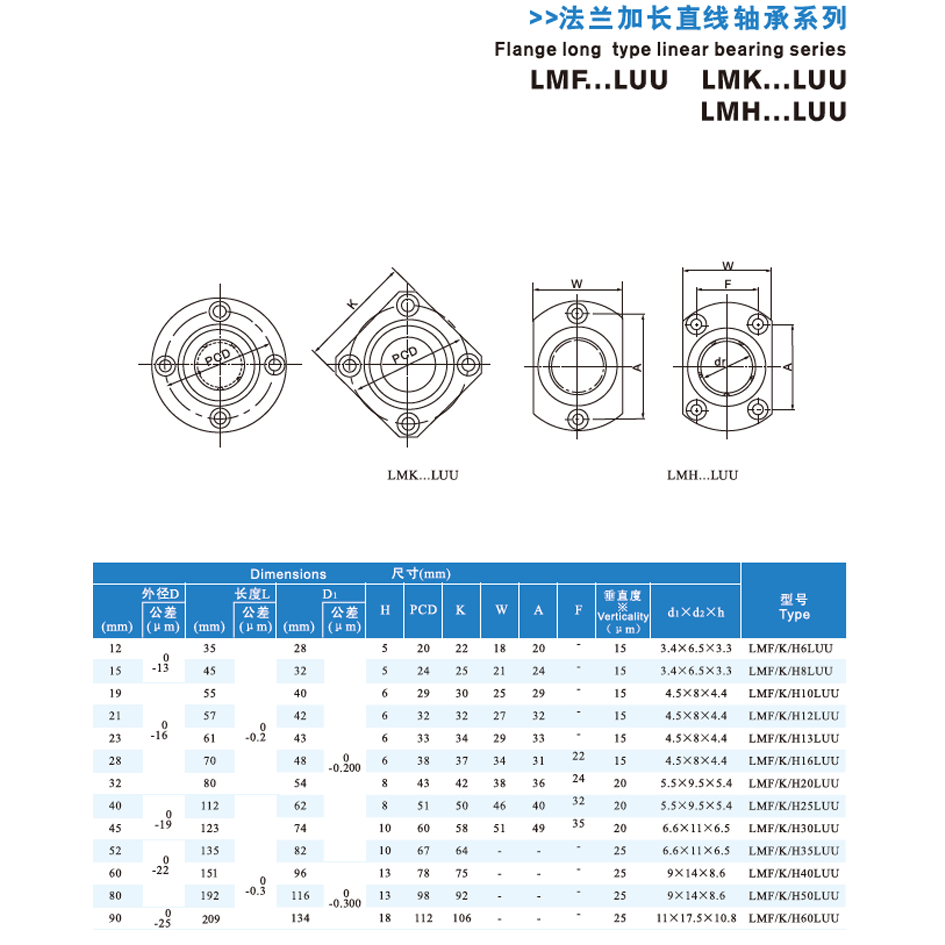
Batch‑level inspection for linear bearings, including LMF…LUU series, is carried out with a focus on dimensional accuracy, hardness, and surface quality. Combined with pre‑filled lubrication and robust sealing, this inspection regime aims to maintain stable performance over prolonged operating periods. For end users, consistent quality translates into lower failure rates, reduced maintenance downtime, and more predictable machine behavior.
Conclusion: The Role of LDA Bearing in Solving Linear Motion Pain Points
LDA bearing integrates linear bearings, optical shafts, aluminum slider blocks, guideways, rod end bearings, and drag chains into a coherent motion portfolio. Within this portfolio, the LMF LUU round flange linear bearing China manufacturer offering provides standardized models like LMF6LUU, LMF8LUU, LMF12LUU, and LMF16LUU, built with GCr15 bearing steel, nylon retainers, and high‑integrity seals. These products are supported by ISO9001, ISO14001, and CE certifications, ensuring that quality control and regulatory compliance are systematically addressed.
For equipment manufacturers and integrators, the combination of cost control, precision, and supply chain stability is central to project success. By acting as a reliable China supplier for LMF6LUU LMF8LUU LMF12LUU LMF16LUU and complementary linear motion components, LDA bearing helps reduce component‑related costs, enhance production efficiency, and lower maintenance risks. The case studies and customer feedback illustrate measurable improvements such as cost reductions of around 20–30% and production efficiency gains of 15–25%, achieved through carefully selected linear motion systems rather than isolated component changes.
When selecting linear motion components for CNC, packaging, or 3D printing applications, attention to bearing design, material quality, and supply chain reliability is essential. LDA bearing addresses these points through integrated manufacturing, certified quality systems, and stock availability for key LMF…LUU models. For practitioners in automation and mechanical engineering, this provides a practical path to resolving common pain points in linear motion design, balancing cost constraints with sustained precision and dependable operation.
 Tel
Tel
 Email
Email
 Address
No. 99 Shangxu Road, Nanmingshan Street, Liandu District, Lishui City, Zhejiang Province, China